Wednesday, April 25, 2018

332 How to Make a Part-time Income with Your Blog

Have you already made your first dollar from your blog?

Are you looking for ways to increase that to a part-time income?

In this post, I will share a step by step process for making it happen.

Listen to the episode

My part-time blogging business

We walked into the house like it was any other day. But this day was different.

As she walked in, my wife saw something that surprised her.

There was a brand new living room set. SURPRISE!

She stood there wondering what was happening.

This was the first time it became real to her. All that time I spent in front of my computer blogging was more than a hobby.

It was actually starting to make money that affected our daily lives.

I went pro.

But how does one make money with a blog? Let's review . . .

Review of how to make money with your blog

In last week's episode, I spoke about how to make your first dollar with your blog.

essential elements making money

Three essential elements for making money

I covered the three essential elements for making money:

  • A specific audience with a
  • Specific problem to solve and a
  • Specific solution to that specific problem

Once you have these three elements, you can start making money from your blog.

The keys to going part-time

To get to the next level, you need a way to make a consistent income with your blog. Here are the keys to doing that:

  • Going part-time

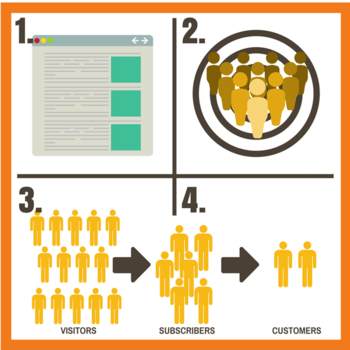
    Keys to going part-time

    Create consistent content that provides value. This will be the driver of everything you do in your business.

  • Consistently get the right people to your content. If you don't have anyone visiting your blog, it won't make any money.
  • Have a process to convert those visitors into subscribers. Your email list will be one of your most valuable assets. You want to get as many of the right people on there as possible.
  • Have a process to convert those subscribers into customers. This is where you will make actual money.

If you have all these four elements in place, I guarantee that you will make money.

Now let's dive deeper into the making money part.

How you will make money

While there are many ways to make money with your blog, I'm going to share the ones that I like most.

These are the ones I've used over and over and are responsible for the bulk of my income. You can choose to use one or all.

Promoting products and/or services as an affiliate

This is where you get a commission whenever someone you refer buys something. I cover this in great detail in my last episode so I'll refer you over there for more info.

Selling your own digital product

This is my favorite way to make money with my blog. Let's address the pros and cons.

Promote your own products or an affiliate's product

Promote your own products or an affiliate product

Pros:

  • You make ALL the money (minus transaction fees of course). When you promote something as an affiliate, you only get a percentage of the sale. With your own product, it's all yours.
  • Selling more doesn't take a lot of extra effort. Whether one or 100 people buy your digital product, the sale doesn't take extra effort. It's digital. It's a beautiful thing.
  • You can refine/optimize the entire process. If something isn't working well, you can always tweak. You are in full control.

Cons:

  • You have to create the product. This takes time and effort. And in most cases, there will be a lot to learn.
  • You have to provide the support. Customer support/service can take a lot, depending on the product you create. You're now fully responsible for this process.
  • You have to create the process. Yes, that includes sales pages, emails, and setting up the technology.

Providing a service

This is another way to make money with your blog. Here are some of the pros and cons.

Provide a service

Provide a service

Pros:

  • You don't have to create a product. This can reduce the hurdles you need to overcome to get started.
  • Leverages an expertise you already have (or are learning). Often, this doesn't take extra effort on our part, because you already have the knowledge.
  • You can start selling quicker. Because there isn't as much to set up, it's easier to get started.

Cons:

  • It's dependent on your time. Your time is a limited resource and this will limit how much you can do.
  • To make more money, you have to do more (or charge more). There is a limit to how much a person can do because you are exchanging time for money.

How to make a part-time income with your blog

Now that you understand three of the ways you can make money from your blog, let's talk about the process.

The first step in the process is to plan the journey. Here's how you do this:

Identify your first three affiliate products

These three products should solve three specific problems for your target audience.

Identify products to offer

Identify products to offer and services to provide

You will focus all your affiliate marketing efforts on these 3 products. Don't worry, you can expand in the future. But it will be good to have more focus in the beginning.

Choose a product to create a service to provide

What kind of product will you create? Will it be an Ebook or a course?

Or will you be providing a specific service like tutoring or coaching?

Make a decision based on what provides the most value to your audience and what you're able to do.

Plan the most logical customer journey

Now that you know what you will be promoting, it's time to plot out the most logical customer journey.

This is the journey that makes the most sense. Create a narrative for this journey that goes like this:

  • Stumbles onto your posts and wants to know more
  • She gets directed to a page that highlights logical sequence of content
  • She sees you have a valuable lead magnet and opts in
  • She goes through a logical, value-added sequence of emails
  • She gets introduced to the products/services you recommend/provide. This happens in a specific series.
  • She buys something.
  • She buys something else.

Fill in the details of what this looks like for your business.

Create your content calendar

Your content will drive your business so it's important to get it right. Plan your content with your audience's goals in mind.

A great resource for helping with this is my Blog Content Calendar Spreadsheet.

Create your content calendar

Create your content calendar

Here are some ideas for content that is effective for selling:

  • Why You Should [INSERT TOPIC HERE]
  • How I Got into [INSERT TOPIC HERE]
  • X Mistakes [INSERT AUDIENCE HERE] Makes when [INSERT TOPIC HERE]
  • What to do Before [INSERT TOPIC HERE]
  • How to [INSERT TOPIC HERE]
  • A step-by-step Guide for [INSERT TOPIC HERE]
  • How [INSERT PRODUCT/SERVICE HERE] Can Help you [INSERT TOPIC HERE]
  • What Success Looks Like (or will look like)
  • Case Study: How [INSERT NAME] [INSERT TOPIC HERE] and [INSERT RESULT HERE]
  • A Call to Action: Do these X Steps Now

Here's the great part – if you create content in that sequence, it can be easily repackaged into a product.

Create your lead magnet

lead magnet

Create your lead magnet

This is the free resource you create to convince people to join your email list.

It should solve a specific problem for your target audience and can be very simple.

Here are some examples:

  • Top five tools to help you [INSERT GOAL HERE]
  • How to [SOLVE PROBLEM]
  • A utility. This is something your audience can use to help them on their journey. For example – my blog content calendar spreadsheet.

Create your product or service listing

If you do decide to step things up a bit and create a product or provide a service, let's get that going.

  • product or service listing

    Create your product or service listing

    Create an eBook. These are simple to create. You can use any word processor and export the file as a PDF. If you want to dig deeper into this, check out my episode on creating and selling ebooks.

  • Create a course. If you decide to go this route, I recommend using a service like Thinkific or Teachable. These services make it ridiculously easy to create courses.
  • Provide a service. This can be anything from consulting to coaching or tutoring.

Create a sales page

Sales Page

Create a Sales Page

There are many options out there for creating sales pages. Here are three:

  • Create a regular page on your blog. This is not the best option, but it lowers the barrier to entry. You don't have to buy anything extra to get started.
  • Use a landing page generator like Thrive Architect or LeadPages.
  • If you use Teachable or Thinkific, they have their own built-in sales pages.

Create a goal-directed autoresponder campaign

Now that you have everything set up, it's time to create the campaign to make sales.

When doing so, keep the customer narrative in mind (customer journey).

Create your Sales Funnel

Create your Sales Funnel

Ask the following questions:

  • What info do they need to accomplish goals or overcome hurdles?
  • How can you give them a quick win?
  • How can you provide them with VALUE?

Equipped with your answers to these questions, create your autoresponder campaign.

This is a part of your blogging sales funnel. To dig deeper into this, check out my blogging sales funnel talk from Social Media Marketing World.

Your goal is to create one sales funnel, refine it, perfect it and then repeat the process.

Get the word out there

This is the part that takes time, but it's a necessary part of the equation.

Here are some things you can do to make this a reality:

  • Get the word out there

    Get the word out there

    Keep creating consistent content.

  • Learn about and optimize your content for the search engines (SEO).
  • Optimize your content for social sharing.
  • Choose a social network to focus on and go all in.
  • Diversify your social strategy over time.
  • Collaborate with other bloggers.
  • Nurture your community.

Does that sound like a lot? Great. Then I painted an accurate picture of what it takes to do this ;).

Analyze what works

This is the part that most bloggers overlook. They get on a hamster wheel of creating content and pushing things out there.

Analyze what works

Analyze what works

But they never stop to analyze what's working so that they can make improvements.

You will be different. Your goal is to analyze your results and tweak your processes over time.

Use the data you collect to improve and refine what you do.

This will set you up to become a full-time blogger. But we'll cover that more in next week's episode.

Resources Mentioned

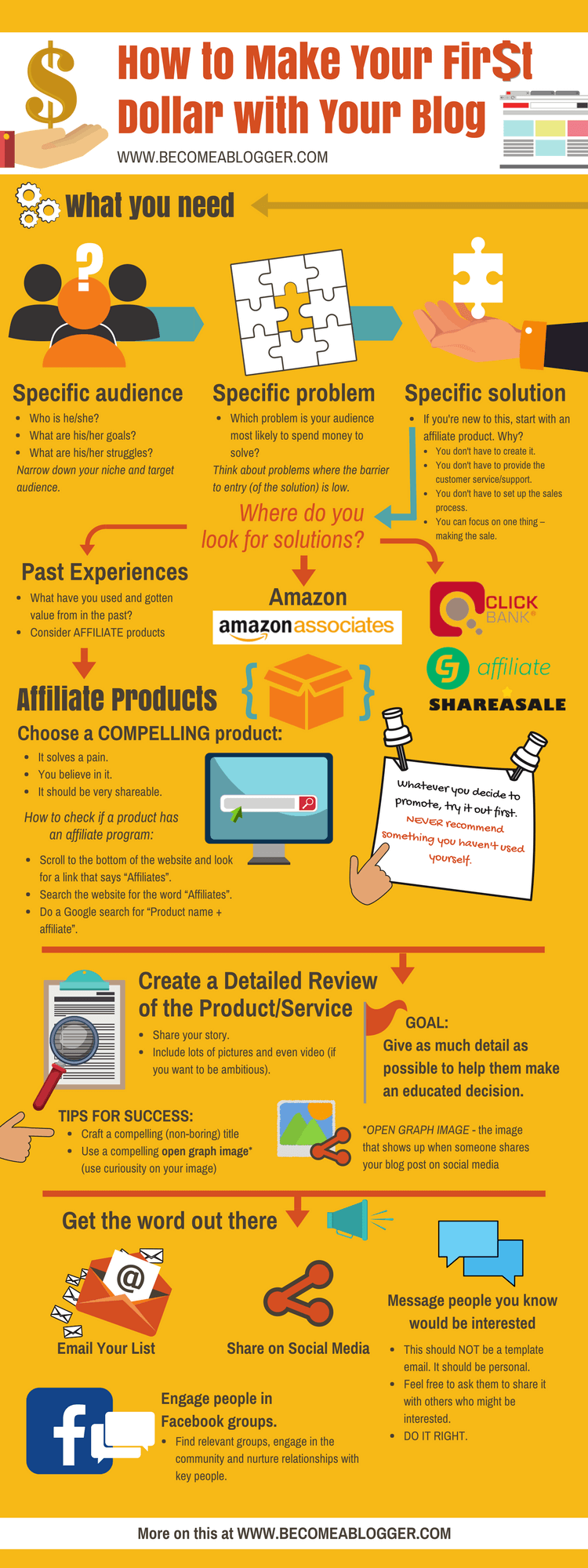
Infographic

Part-time Income with Your Blog

Infographic: How to Make a Part-time Income with Your Blog

The post 332 How to Make a Part-time Income with Your Blog appeared first on Become A Blogger by Leslie Samuel.


source https://www.becomeablogger.com/26068/make-part-time-income-with-your-blog/

Wednesday, April 18, 2018

The Worldpress Longtail Blog Strategy

Using WordPress Tags and Google+ targeting longtail keywords can really turbo charge rankings for multiple reasons, not only the long tails but also your mid tail and main SEO target keywords.

In the video below I first go over the strategy in brief, and then slowly make a post with this strategy so you can see every step of the way. Be warned though, my idea of a “quick video” on this turned into a 44 minute epic, so you may want to grab some strong coffee lol – if you’re pretty tech / SEO savvy the first 5-10 mins though should do the trick.

I’ve also made a little tool below to help speed up making lists for hashtags and WordPress tags for this strategy…

https://www.scott.services/tool

Any questions on it please feel free to contact me 🙂

https://fast.wistia.com/embed/medias/bnrvx7si6i.jsonphttps://fast.wistia.com/assets/external/E-v1.js

The post The Worldpress Longtail Blog Strategy appeared first on Scott SEO & PPC Services.

Source: https://www.scott.services/the-worldpress-longtail-blog-strategy/


source https://scottservices.wordpress.com/2018/04/18/the-worldpress-longtail-blog-strategy/

331 How to Make Your First Dollar with Your Blog

Are you looking to start making money with your blog?

Do you wish you could get to that first dollar of revenue but feel like it won't happen?

In this post, I will walk you through a process to help that money to start flowing.

Listen to This Episode

My First Blogging Dollar (or $3,000)

First Blogging Dollar

My First Blogging Dollar

I can remember it like it was yesterday. I started my blog in August of 2008.

In September of that year, I made $3000. It was an AMAZING experience.

No longer was it only an idea. It was a reality. I could do this.

How did I do it?

First off – this is NOT typical. The reason I was able to make that amount of money so fast was because I already had an audience.

I had spent the previous 8 months working my behind off to build up my reputation in a forum.

When I started my blog, the audience came quickly because of the work I had done beforehand.

It was an audience of people who were looking to make money using Freebie Websites.

I was teaching them how to do it and I figured out a problem they needed solving.

Most of them were sticking in the forums all day trying to get people. But they didn't have a site of their own.

My solution was simple – I would set up a site for them (from a template I made).

All they had to do was use my affiliate link to sign up for hosting. Each of those transactions made me $100.

And in my first month of promoting that offer, I got 30 people to say yes.

Why did this work so well? Here are Five reasons:

  • I had a targeted audience. These weren't random people looking to build a website. They were people interested in starting websites for their freebie trading businesses.
  • I found a need. I knew how much time they were spending going after people in forums. But I also knew that they didn't have their own sites to send them to. Their processes were inefficient and I could help them do a better job.
  • I provided an EASY solution. The key here is the word easy. They didn't have to do a lot of work. All they had to do was sign up for hosting and send me their info. Easy peasy.
  • There was a low barrier to entry. They didn't have to spend a ton of money to get in. Their cost was only $5/month.
  • I offered extra value. Not only were they getting what they signed up for (hosting), I sweetened the pie. I offered them a customized site at no extra cost.

All in all, it was a successful first campaign.

Why it's important to make your first dollar

In this world of online business, there are so many scams out there. I've lost money on scams before and it ain't pretty.

Getting to your first dollar is important because it:

  • Proves that it IS possible. Most people who try NEVER make a dollar on the internet. That's VERY discouraging. By making something, you move from the realm of possibility to certainty.
  • Validates your business idea. Is the solution you're hoping to provide something people are willing to pay you for? You never know for sure until you get people to actually pay. Getting to that first dollar is a great way to validate your idea.

Your mission (if you choose to accept it) is to get to that first dollar quickly.

What you need

To make your first dollar with your blog, you will need three things:

  • A specific audience.
  • A specific (pressing) problem to solve.
  • A specific solution to sell to that specific audience to help them solve that specific problem.

Start with the specific audience

specific audience

Start with the specific audience

In trying to decide on a specific audience, answer the following three questions:

  • Who is he/she?
  • What are his/her goals?
  • What are his/her struggles?

Answering these three questions will help you in the next step. If you haven't narrowed down your niche and target audience yet, listen to this episode.

A specific problem to solve

Once you've identified your audience, you should have an idea of what problems they face.

For this activity, choose the most pressing problem to move forward on.

Ask yourself this question – Which problem are they most likely to spend money to solve?

Beyond that I want you to think about problems where the barrier to entry (of the solution) is low.

Finding a Specific Solution

specific solution specific problem

Offer a specific solution to a specific problem

Now that you've identified a specific problem, it's time to find a solution.

Since you're still new to this, start with an affiliate product. These are products where you refer people using a special link (affiliate link). If someone decides to buy, you get a commission.

Here are a few reasons why I recommend starting with an affiliate product:

  • You don't have to create it.
  • You don't have to provide the customer service/support.
  • You don't have to set up the sales process.
  • You can focus on one thing – making the sale.

This will be great practice for all the amazing things you will do in the future.

IMPORTANT: It's very important for you to choose a compelling product. Here's what I mean by compelling:

  • It solves a pain. This is not just any product. There should be a clear pain point that it provides a solution to.
  • You believe in it. This is important for the brand you're building. Don't promote something because it makes money. Promote it because you know it's an A+ product. This means you will have to do your research (if you haven't done so already).
  • It should be very shareable. Ask yourself this question – If I create content about this product, are people likely to share it?

Where to look

Affiliate marketing has come a long way. There are many companies that offer affiliate programs. Here's where I would recommend for you to look.

Consult your past experiences.

This is the best option for finding great options for products/services to promote. What have you used and gotten value from in the past?

When searching, it's great to try something that offers a decent commission. But it is not necessary.

If you don't know if a particular product has an affiliate program, here are two things you can do:

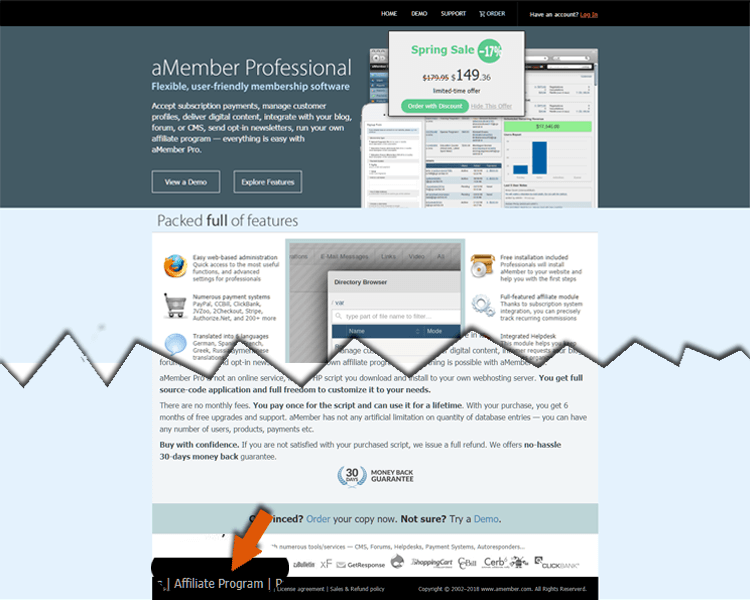
  • Scroll to the bottom of the website and look for a link that says “Affiliates”. If there isn't a link then…
website affiliate

Example website: Amember.com. Link to their affiliate program can be found by scrolling down to the bottom of their webpage.

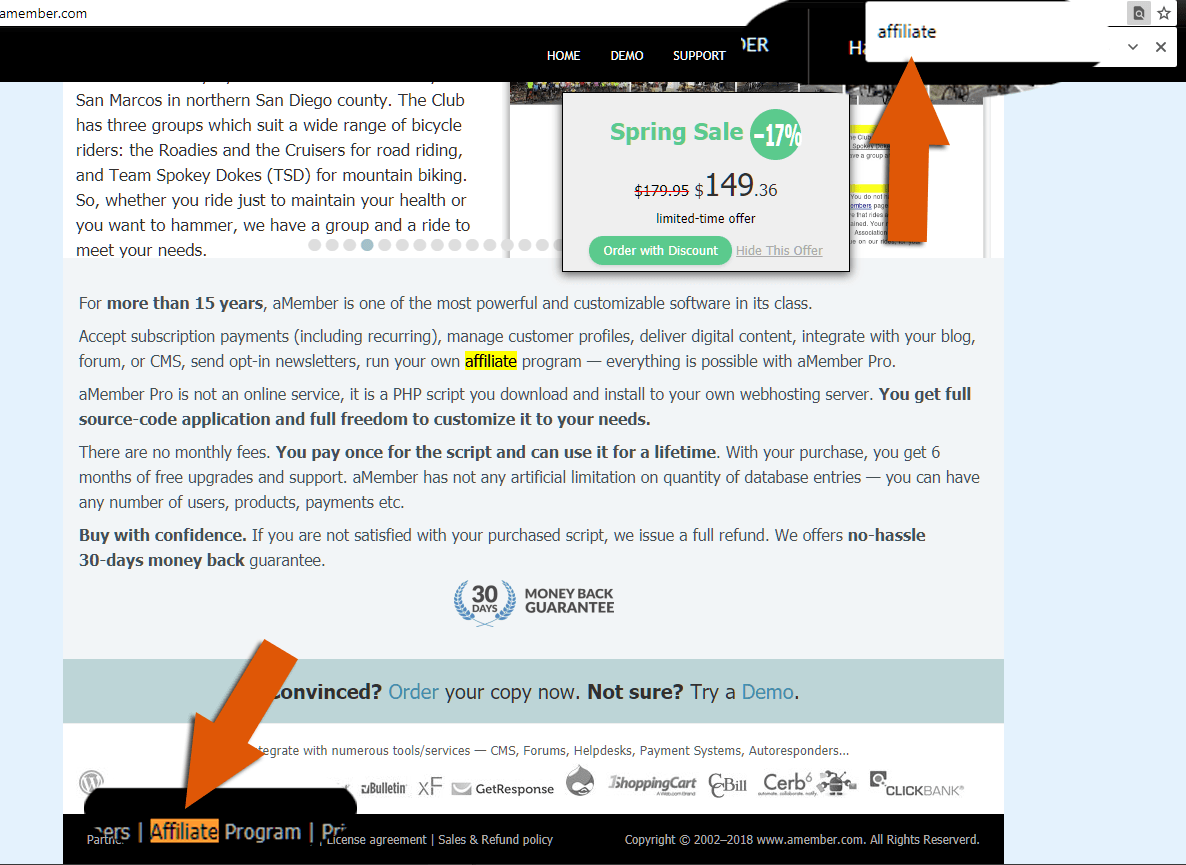
  • Search the website for the word “Affiliates”. If there is no search bar (or you don't find it this way), then…

Example website: Amember.com. A search tool is used to find the word “Affiliate” on the webpage.

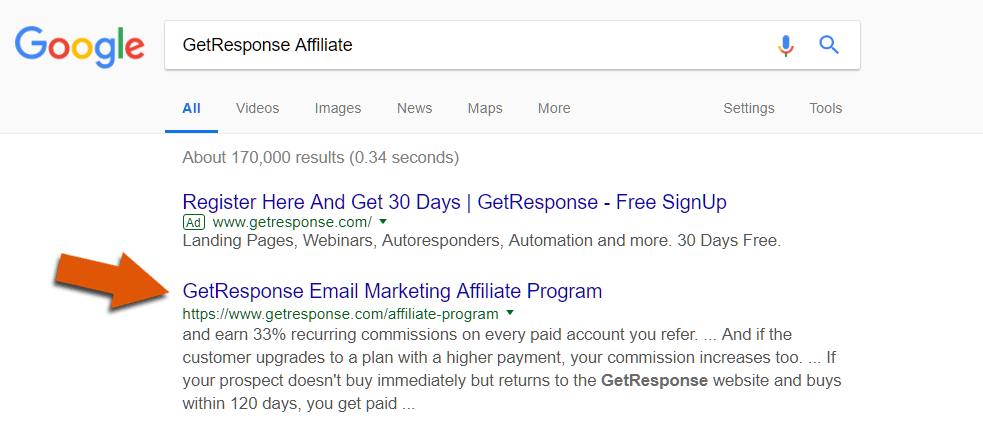
  • Do a Google search for “Product name + affiliate”.
Google search affiliate

Example of a product, GetResponse, with affiliate program searched using Google by typing “GetResponse + Affiliate”

I generally find that by doing these three things I can find the affiliate program. Or, I find out that there isn't any.

Amazon

Amazon is a great place to look for products to promote because they sell everything (almost).

The affiliate commissions are pretty low (between 1 and 10% depending on the product sold).

But you make a commission on anything that person buys within 24 hours of clicking on your link.

So if you recommended that diaper and they buy a couch, you will be happy.

Another great option is that they pay a flat bounty for audiobook sign-ups. You can recommend a book, refer someone to get 2 FREE books and make $5 for each signup.

Check out Amazon Associates

Amazon Associates

Amazon Associates

Other places

There are other affiliate networks that you can check out that list all kinds of products. Here are a few:

Whatever you decide to promote, I recommend you try it out first. NEVER recommend something you haven't used yourself.

Create a Detailed Review of the Product/Service

Once you decided on an affiliate product/service to promote, it's time to create content.

Create a detailed review of the product

Create a detailed review of the product

Create a detailed review of this product. In doing so, I recommend you share your story.

How did you stumble onto the product/service? How did/do you use it? What were the benefits you experienced?

Then switch to focusing on them – what specific problem will it help them solve?

Your goal here is to give as much detail as possible to help them make an educated decision.

I also recommend including lots of pictures and even video (if you want to be ambitious).

Here are a few more tips to help you be successful:

Craft a compelling (non-boring) title

This is something you should spend some time on. You want to have an element of curiosity in there. But you also want to show that it's a solution to a specific problem.

Here are some example titles that would work well:

  • How we Saved Tones of Money on Movies Using Moviepass
  • How the Instant Made me an Instant Chef
  • How I fell in Love with a Boring Hosting Company
  • Five Products that Literally Transformed my Marriage
  • How Poo Pouri Transformed my Bathroom-going Experience

Spend some time to get this right. It will pay off in the future.

Use a compelling open graph image

When someone shares your post on social media, this is the image that will show up.

Select this image carefully. Remember – it's NOT about the product. It's about the transformation.

It's a good idea to use curiosity in the image. Pay attention to the images you click on. What do they have in common? How can you use those elements in the images you choose?

Get the word out there

Now that you have your awesome article written, it's time to get the word out there. Here are a few steps you can take.

Email your list

Get the word out there

Get the word out there

It doesn't matter how large or small your list is, use it. Send out an email letting them know about this amazing solution.

Don't tell them all about it in the email. Instead, let them know they can find out about it in your latest blog post. Then link to that post.

Share on social media

Social media can be powerful for helping you get the word out there. Here are some things you can do:

  • Go live. Yes, pull out your phone (or webcam) and do a live video talking about the post. Well, not about the post – about the solution. Then point to the post for people to find out more.
  • Pre-recorded video. Maybe you aren't comfortable going live. That's fine. Upload a prerecorded video and link to your post.
  • Create a story. Stories are becoming popular on more platforms these days. Take advantage of this cool feature.
  • Written story. I find that writing out a short story on Facebook tends to work well for getting people to engage.
  • Share the link. While this isn't as effective as it used to be, you can still get some clicks by sharing the link with a little bit of info.

Message people you know would be interested

This can be annoying. But if you do it right, it actually provides value.

Do you know people who would find value in the product/service? Send them a PERSONAL message. Let them know why you thought of them.

Note: this should NOT be a template email. It should be personal.

Also, feel free to ask them to share it with others who might be interested.

Other tips

Facebook engagement

Engage people in Facebook groups

Here are a few other things you might want to try:

  • Engage people in Facebook groups. While most groups won't allow you to post links to your blog, they are great for relationships. Find relevant groups, engage in the community and nurture relationships with key people. As these relationships develop, feel free to reach out to your new friends when you post (but not too often).
  • Drive targeted ads to that post. I hesitate to recommend this because I know that it's easy to waste money on ads. Especially if you don't know what you're doing. But if you get the targeting right, spending a few bucks can help you validate an idea quickly.

Time to celebrate your win

If you take the steps outlined here, you are on your way to your first dollar.

Once you make that first dollar, I want you to go all out and celebrate that win.

Do a happy dance (or whatever celebration looks like to you). Don't let that moment pass you by. It's the first of many.

Your turn

And now I turn it over to you. Once you've decided what product/service you will promote, let me know in the comments.

And if you need feedback, feel free to ask.

Resources Mentioned

Infographic

First Dollar with Your Blog

Infographic: How to Make Your First Dollar with Your Blog

The post 331 How to Make Your First Dollar with Your Blog appeared first on Become A Blogger by Leslie Samuel.


source https://www.becomeablogger.com/26003/how-to-make-your-first-dollar-with-your-blog/
Monday, April 16, 2018

What Is GDPR and How Does It Affect Bloggers?

What is GDPR? And are you wondering if it affects you as a blogger?

Well, they most likely do. And in this article, I will explain what GDPR is and how it pertains to us bloggers.

Disclaimer: I’m not a legal professional nor do I play one on the internet. Consult an attorney to make decisions for your blog/business related to GDPR.

Side note: Yes – this is a long article. If you'd prefer to be lazy, you can jump to my summary for lazy people at the end in the form of an infographic.

Don't worry, when I say lazy, I say it with love, lol.

The Privacy Problem

GDPR – General Data Protection Regulation

It's the buzzword these days – privacy. Everyone wants it, but nobody seems to have it.

Sites like Facebook seem to throw privacy out the door with the baby and the bathwater.

So many news agencies are up in an uproar over Cambridge Analytica. Russia seemingly undermined the U.S. elections.

What's a country to do? Well, the continent of Europe has decided to do something big, and it's called GDPR.

What is GDPR?

GDPR stands for General Data Protection Regulation. According to the GDPR website, the goal is “to protect and empower all EU citizens data privacy and reshape the way organizations across the region approach data privacy.”

In simple terms, Europe wants their citizens to have more control over how and when companies use their personal data.

A VERY Brief History

Every European state could create its own local laws based on the directive, which became difficult to enforce.

Back in 1995, Europe established the Data Protection Directive. This had some general guidelines for data protection.

But every European state could create its own local laws based on the directive. As you can imagine, this resulted in a messy situation with laws that were difficult to enforce.

Some states had very strict privacy laws. Others were more lenient.

The EU parliament wasn't feeling this and wanted something more uniform.

So on April 14th, 2016 they approved the GDPR, and the world turned upside down (hat tip to the Hamilton soundtrack).

There is one HUGE difference between the GDPR and the data protection directive of old.

The GDPR governs ALL member states.

So Does it Affect You as a Blogger?

If you collect ONE email address from ONE EU citizen, the GDPR applies to you.

The GDPR affects any blogger who collects any data from EU citizens.

It doesn't matter if your blog or business is in Europe or Timbuktu.

Let's say you're building an email list (which you should be doing). If you collect ONE email address from ONE EU citizen, the GDPR applies to you.

In other words, if you're a blogger, it's safe to say that it applies to you.

I mean – I'm an EU citizen (bet you didn't know that). If I'm on your email list and you don't uphold the GDPR, I can probably report you ;).

So what exactly does this mean for you? I'm Glad you asked.

Get Consent and Make it CLEAR!

Consent

Be explicit when getting consent.

This is one of the most significant tenets of the GDPR. They are very explicit in their statements on how you should get consent.

Let me make it clear for you. Let's say you're collecting email addresses to build your email list. Make sure to follow these guidelines:

  • Be clear about who you are. They should know who they are transacting with.
  • People must opt-in to receive your messages (HALLELUJAH). If you've been adding people to your list, STOP IT NOW.
  • Consent must be “freely given, specific, informed and unambiguous.” Use clear and plain language letting them know what they signed up for.
  • If you are using their personal data in any way, let them know how.
  • Silence is NOT consent. In other words, they have to actively show that they want to join your list. Do not use any pre-checked boxes or anything like that.
  • Only collect what's necessary (they call this Data Minimisation). Don't collect any data that's not needed for the intended purposes.
  • “It must be as easy to withdraw consent as it is to give it.” In other words, don't have those hidden unsubscribe links that nobody can find.

The Burden of Proof Lies with YOU

Keep a record of proof of consent.

Keep a record of proof of consent.

It is now your responsibility to be able to prove that you have consent. You have to keep a good record of this.

Fortunately, good service providers are aware of these changes. They should be taking steps to be compliant. To be on the safe side, check with your email service providers to see what they are doing.

I use Drip. They are aware of the situation and working on making sure that they are compliant by the deadline.

So is GetResponse, the service I recommend for beginners. Even Thrive Themes, the company behind Thrive Leads, is making changes.

But it doesn't end there. You are the one that needs to make sure that everything is being done to meet the regulation.

What About Existing Subscribers?

So Leslie, what about my existing email subscribers? Surely I don't have to do anything about them since they subscribed before the GDPR took effect. Right?

WRONG!

Based on the GDPR, you have to bring those subscriptions up to the current standards.

If the EU citizens on your list have not given the kind of consent required based on the GDPR, you have two options:

  • Get the kind of consent I spoke about earlier. It must be “freely given, specific, informed and unambiguous.”
  • Remove them from your list.

How do you know if you have EU citizens on your list? Most email service providers will allow you to search by Time Zone.

In Drip, you can search for anyone with a Time Zone in Europe.

Drip_Filter

Through Drip's filter, I can have an overview of the number of European subscribers in my list.

Just to give you an idea, I have 16,880 people on my email list. 1,507 of those people are in European time zones.

But this doesn't account for EU citizens living outside of Europe.

So What if I Do Nothing?

Do nothing

What if I do nothing?

I know – it's tempting to think this. I mean, what's the big deal? Nobody's coming after me, right Leslie?

Well, they are taking this seriously. Not following the regulations can lead to some pretty significant fines.

How big? Up to €20 Million, which is almost $25 Million US, or 4% of global annual turnover – whichever is HIGHER. I read that and chuckled.

The exact thought that came to mind was – DANNNGGGGGG, these EU people are SERIOUS.

And yes – they are. Will they come after you? Technically, they can. But I would imagine that coming after small bloggers would be quite an undertaking.

So What do YOU Think About this Leslie?

Yes, this is a HUGE change for the industry. Yes, the requirements are stricter. But you know what?

I LOVE IT!

Does it make it harder to grow your email list? Yes. But I believe it gives you a much higher quality subscriber.

high quality subscriber base

Personally, I believe this will gives us a higher quality subscriber base.

Instead of using shady tactics to boost our subscription rates, we have to do it by providing value.

  • We have to be more transparent about what we're collecting. Transparency breeds trust, and I love it.

So I won't complain about the GDPR. Instead, I will embrace it as an opportunity to up my game. I look at it as a challenge to become better at what I do.

And I always love those kinds of challenges.

But it's not all about me.

What are your thoughts? Let me know in the comments section below.

Resources Mentioned

Infographic

what GDPR

Infographic: What is GDPR and How Does it Affect Bloggers?

The post What Is GDPR and How Does It Affect Bloggers? appeared first on Become A Blogger by Leslie Samuel.


source https://www.becomeablogger.com/26123/what-is-gdpr-how-it-affect-bloggers/

Wednesday, April 11, 2018

330 How to Build a Blog While Working Full-time with Toddlers – with Marcus Kusi

Do you find yourself struggling to build a blog while working full-time?

Do you have little kids at home and feel like you can't ever get anything done?

In this episode, I talk with Marcus Kusi. And he shares how he was able to build a successful blog while working full-time with Toddlers.

Excuses . . . Be gone!

Listen to the episode

Marcus' Story

Marcus immigrated to the U.S. from Ghana. After marrying his wife, he found himself unable to work due to not having a green card.

While going through the legal process to get his green card, he needed something to do.

Marcus Kusi

Marcus Kusi

Fortunately, he stumbled onto two books that changed his perspective on business.

Those two books were The $100 Startup and Entreleadership. Through the $100 startup, he saw that people were starting businesses for under $100.

While being in a challenging financial situation, Marcus saw hope. If others could do it, so could he.

His monthly budget for personal money was $5. So Marcus did what most people wouldn't do.

He saved that $5 for four months and used his accumulated $20 to start a business.

Based on his research, he saw that people were making money selling stuff online.

As a college student, he knew a lot about textbooks. So Marcus decided to buy books on eBay and sell them on Amazon.

It took a lot of work, but with his $20 investment, he was able to make $20K in his first year.

When he got his green card, he was finally able to start working part-time. This eased their financial burden a little.

His wife also gave birth to their first child that year, which added to the complexity of their lives. But he kept plugging away.

In 2013, he was able to ramp things up. Their 3rd bedroom was full of textbooks, and he did it all. He was the buyer, seller, packager, shipper and customer service representative.

And his efforts paid off. He made $48K in his second year of business.

Starting their blog

Marcus started learning about blogs back in 2008. But he didn't know too much about how they worked.

In 2013, a stranger came up to him and his wife in a grocery store and made a profound statement. He said that they gave off a peaceful vibe.

At home that night, they thought about it and concluded that they had a peaceful relationship.

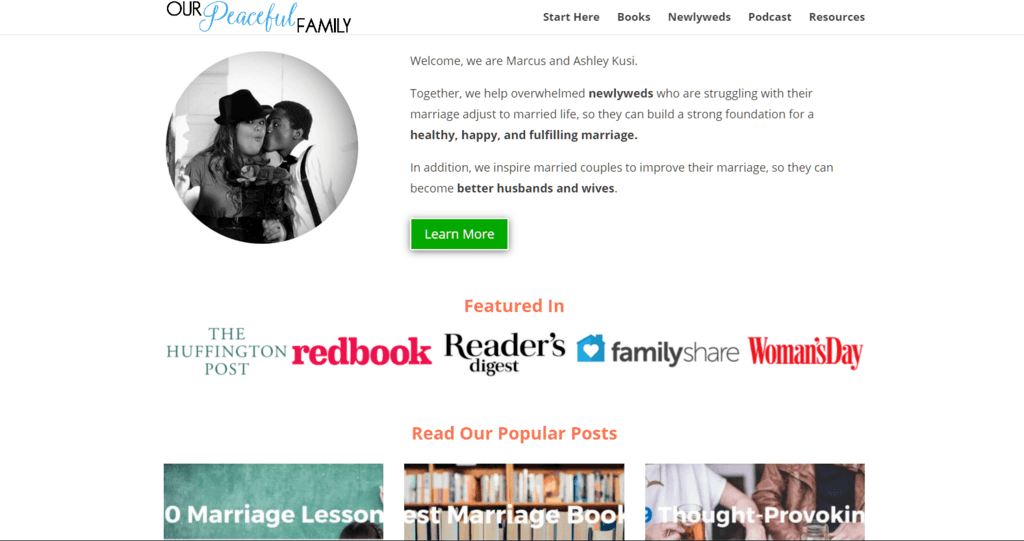
They thought about what they could do with that to help others and decided to start their blog. Our Peaceful Family was born.

Our Peaceful Family

Our Peaceful Family

Through that blog, they shared their story to encourage other families. Since they were still newly married, they decided to focus on newlyweds.

And they've been helping families ever since.

Turning the blog into a business

In 2014, they realized that they could make money from their blog. They started reading articles online on the topic.

They also started listening to podcasts and found out about Pat Flynn.

When they found him, they saw his income reports. That's when they knew it was possible.

They also discovered Steve Scott and saw that he was a best-selling author.

They realized that they had a free ebook that people were downloading every day.

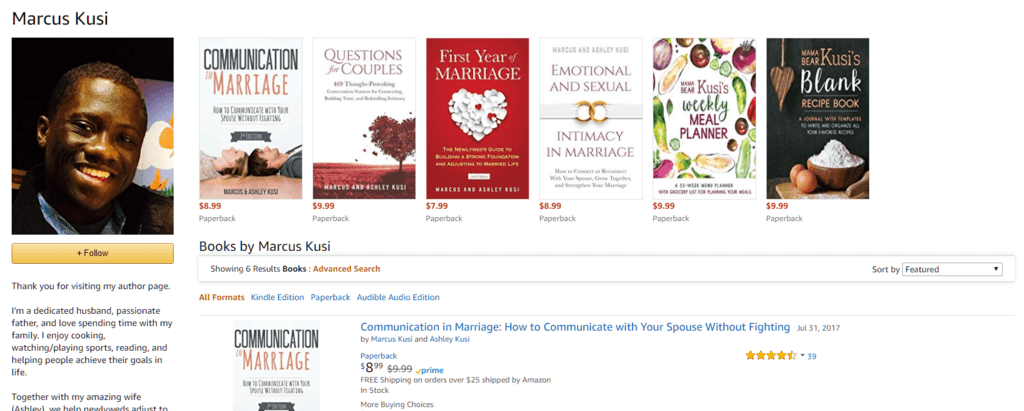
Kusi's books sold on Amazon.com

After thinking about it, they decided to sell that ebook and people started buying them. Now, they've written and sold 4 or 5 books, and their blog is making money.

How they grew the blog

SEO and Article Writing

Marcus studied SEO and spent a lot of time writing content that people wanted to read.

Marcus listened to my podcast and learned a lot about how to grow a blog from it. He knew that he could focus on many things, but that he had limited time.

So he decided to focus on creating great content and optimizing their posts for traffic.

He studied SEO and spent a lot of time learning how to write articles people wanted to read.

Here's what Marcus describes as the keys to writing great articles that rank well in Google:

  • Figure out if there is demand for it. Use the Google Keyword Planner to find that out. He looks for keyword phrases that have at least 1000 monthly searches. When you don't have lots of time, you need to make sure you're spending time creating the right content.
  • Write the article and make sure the content is practical and easy to follow.
  • Provide value. Yes, this is very important. Your content will be judged on the value itprovides. Make sure to overdeliver on this.

How to Build a Blog While Working Full-time with Toddlers

Here are Marcus' tips for building a blog while you have lots going on (like a full-time job and little kiddos).

Make sure your spouse is on board

Spouse on board

It's easier to get things done when your spouse is on board.

If your spouse is not on board with what you're doing, it'll be hard to make it work.

When Marcus first started, his wife didn't really get what he was doing. She did support his interest but wasn't all in yet.

But one month, his little side project made $500, which was more than they were paying for rent at the time.

At that moment, she knew it was real, and she became more supportive than ever.

Start your mornings off STRONG!

In 2016, Marcus discovered the Miracle Morning concept and applied it to his life.

The Miracle Morning by Hal Elrod

The Miracle Morning by Hal Elrod helped improve Marcus's productivity

He Googled the miracle morning and found a worksheet that showed the practice. After going through the recommended 30-day challenge, his productivity skyrocketed.

Since then, he has been waking up at 5 am and going through a routine that works for him. Here's how his mornings look:

  • Wake up (at 5 am)
  • Turn off the alarm – he intentionally places this in a corner away from his bed.
  • Thinks about things he's grateful for.
  • Check sales for the previous night.
    • He does this to see if they are on track to reach their monthly goals.
  • Starts working on his to-do list

Focus on what you want to achieve (your end goal)

Focus end goal

Focus on your end goal

What do you want to accomplish with your blog? Decide that first. Once you've made that decision, you have to figure out what you can do to get there.

Work out a strategy. Will you create courses, write books, or do something else?

Marcus' goal is to be able to resign from his job, and he's well on his way to making that a reality.

So what about you?

Do you have a full-time job? What about kids? Or maybe you have a lot going on in your life? And are you trying to grow your blog?

Well, you are not alone. But here's the thing – it CAN happen. You have to make it happen.

Marcus, myself, and many others have done it. Will you?

Resources Mentioned

Infographic

Marcus Kusi

Infographic: How to Build a Blog While Working Full-time with Toddlers

The post 330 How to Build a Blog While Working Full-time with Toddlers – with Marcus Kusi appeared first on Become A Blogger by Leslie Samuel.


source https://www.becomeablogger.com/26066/build-a-blog-full-time-job/

Tuesday, April 10, 2018

Google’s “Random Algo” Explained

So what is Google’s “random algo” or “rank modifier” that it also goes by? well in the video at the end of this page (HIGHLY recommend viewing on this subject, if you prefer to watch than read, scroll down now) we go into depth on what it is and I highly recommend watching the video, but in essence, its designed to try and fool / worry the unknowing SEO provider and / or SEO client. Basically, if Google spots anything that could be SEO, they roll a dice on three metrics…

  1. positive or negative
  2. time frame
  3. position adjustment

Here’s some examples based on different scenarios…

An SEO gains a brilliant backlink to the site, the anchor text is natural, the content of the site and theme related to the target site, high quality original content on the page that links to the target site, etc. Google spots this, and this new link gives the target page a boost in trust, authority and power to take the target keyword from position 8 on page 1, to position 5, but the random algo kicks in, and rolls the dice on the three metrics and picks…

  1. positive or negative = negative
  2. time frame = 3 weeks
  3. position adjustment = 10

So instead of jumping to position 5, which this backlink has really given, the random algo pushes their 8 position down to position 18 for 3 weeks. If the link is still there in 3 weeks, this random algo is removed and they gain what they should of, and jump to position 5. If you didn’t know about the random algo, you may panic that this link has sunk the ranking from position 8 to 18 and remove it and never wait out the random algo and now that position 5 is lost, AND, you may of just tipped off Google you’re doing SEO because if this link wasn’t for SEO gain, why was it removed soon after a dip in rankings.

what is the Google random algoHere’s another example….

An unknowing SEO sees a great gig on fiverr where they can get 100,000 backlinks to their site for just $5, they’ve read that backlinks are powerful for SEO so they order 10 of these for $50, so 500,000 backlinks. These are made and point links to the target site all using the same anchor text, and all the links are from spammy websites. At the moment they’re ranking position 27 for their target keyword and they fire the 500,000 links to the target page, Google spots this and these link reduce trust and should take their position 27 to position 90 BUT, the random algo fires up yet again…

  1. positive or negative = positive
  2. time frame = 2 months
  3. position adjustment = 7

So their position 27 moves up to 20, the SEO thinks “wow this is brilliant” and buys even more so now there’s another 500,000 spammy links (upon seeing this Google would fire off another random algo layered on top of the first). After 2 months the random algo falls off, and the page drops to position 90. Google fooled the SEO into thinking they were good links so they would do more.

Now this is where it gets “fun”. Backlinks are not the only thing to fire off a random algo, other metrics such as: social signals, page / html / site changes, different user metrics, etc and to make it even more complex, every one of these gets its own random algo. For example, lets take just one metric, backlinks, and take the situation where a backlink is added daily to link to a target site, so every day a random algo fires, then daily the random algos could be something like…

day 1 = positive / 8 days / 3 positions

day 2 = positive / 32 days / 1 position

day 3 = negative / 2 days / 76 positions

…. etc – so when this is happening on every backlink found and processed, every social signal, every site change, the somewhat “simple” idea Google has come up with here is just beautiful (from their side at least lol) in making SEO testing take a lot longer (as you need to stop SEO tests and then wait it out for the random algos to “fall off”) and makes it easier for SEO to panic and shoot themselves in the foot, and finally it makes it harder for clients buying SEO services to see what is working / isn’t. For example, a client may rank at position 20 for a keyword, start with a great SEO provider who does amazing work and out of “bad luck” with the random algos, actually see things get worse for a time. If the SEO and client aren’t a) aware of the random algo and b) able to test and verify rank drops aren’t due to other reasons (as you can’t and shouldnt just write off a rank drop as “probably the random algo” as there could be other reasons such as site issues, page issues, content issue, negative seo etc) then the client may think the SEO service isn’t working and stop (which is what Google wants).


Any questions on the above please feel free to shoot me an email at scott@scott.services, I’ve love to hear from you, and all the best with your SEO, Scott 🙂

This post is also available on our Google+ page at https://plus.google.com/u/0/+ScottDSmith

If you’d like to get even more information about it, why not check out Googles patent on this at https://patents.google.com/patent/US20090171943

https://fast.wistia.com/embed/medias/ka84163vn3.jsonphttps://fast.wistia.com/assets/external/E-v1.js

The post Google’s “Random Algo” Explained appeared first on Scott SEO & PPC Services.

Source: https://www.scott.services/googles-random-algo/


source https://scottservices.wordpress.com/2018/04/10/googles-random-algo-explained/

Wednesday, April 4, 2018

329 How to Use a Blog to Grow an Offline Business – Bella Vasta

Are you wondering how to use a blog to promote an offline business?

Curious about whether blogging can help you take your business to the next level?

In this interview, Bella Vasta shares how she grew her pet sitting business with a blog.

Whether you have an offline business or not, you'll get valuable tips to grow your business.

Listen to the episode

Who is Bella Vasta

Bella Vasta

Bella helps pet sitters scale their businesses. through her website

Bella is a pet business coach. Through her company, Jump Consulting, she helps pet sitters scale their businesses.

She has been coaching pet sitting businesses and corporate clients since 2007. Bella has published some of the most comprehensive research in the pet industry.

And yes – she has the experience under her belt. As a former pet sitting business owner, Bella grew her business using a blog. Through this experience, she helps her clients grow in unconventional ways. Even in a saturated market.

She sold her pet sitting business for six figures in 2016.

When Bella started her business

start business

Bella started her business by accident

When Bella started her business, she was living at home with her parents.

Her parents wanted her to get a “real job” so she got one working at Paychex. It wasn't something she enjoyed. Two weeks in, she decided to leave her job.

She started her business “by accident.” It wasn't because she loved pets. It was because a friend asked her to pet sit her dog.

Seeing this as an opportunity to get away a little, she embraced the idea of starting a business.

She was now a pet sitter and gave it all she had. To get new clients, she went knocking on doors and going up to pet stores.

As hard as she tried, business wasn't doing well. It was a struggle.

Venturing into the world of Blogging

Bella quote

Bella thinks it's best to start somewhere than do nothing.

One day, Bella met with a mentor who recommended that she should start a blog. But Bella didn't think people wanted to hear what she thought.

But she kept hearing about blogging from people like Marcus Sheridan.

In 2010, she decided to start a blog. And as with when she started her business, she went all in.

But when she first started, she didn't do a great job at creating valuable content.

Instead, she stuffed her content with relevant keywords, whether it made sense or not.

She tried to get terms like Scottsdale pet sitter, dog walker, etc. in everything.

She didn't add images well, didn't do video, wasn't marketing or repurposing.

It was mostly shallow answers to questions.

Even while not doing things the best way, she was starting to see results. More business started coming her way.

The lesson Bella would like to pass on from this is as follows. It's better to do something than to waste time being paralyzed with fear.

Taking her blog to the next level

best choice

Her goal was to reach to where her audience felt like she was the only (and best) choice.

After seeing how well blogging was working for her business, she decided to get even more serious.

She started understanding the psychology of blogging. People needed to trust her and her business.

It was essential to expose herself, her thoughts and give valuable content to earn trust.

Her goal was to reach to where her audience felt like she was the only (and best) choice.

To do that, she had to create the best content she could and provide as much value as possible.

How to Use Your Blog to Grow Your Offline Business

So the question is – what specifically did she do? How did she build a business that she was able to sell for six figures?

Bella shared some practical tips in the episode. Here they are.

Become one with keyword research

research keywords

Research using keyword tools

Use a tool like Google Keyword Planner to find out what your audience is looking for.

Let's use the example of someone who owns a restaurant. What are people in your area searching for? Are they looking for places to go for date night? Are they looking for romantic places? Is your restaurant a good place for date night?

This research can help you determine what kind of content to create to target them.

Give EVERYTHING and don't hold back

Bloggers often tend to hold things back. Don't do that. Give them the sight, the sound, describe the smell, give EVERYTHING.

If possible, use audio, visual and the written word. Become the go-to resource in your industry in your area.

Go deep

Too many businesses focus on superficial content that only promotes their business. They are all about selling.

Don't do that. Pick a topic for each post and go all in.

Highlight what makes you unique

Why are you different from other businesses in your area? There should always be an answer to that.

If you're a restaurateur, do you get your ingredients in a unique way? Are there particular “secrets” you use in preparing your meals?

Highlight these things because they make you stand out from the crowd.

Support local community events

How do you connect with the community that you serve? Find things in your local community to highlight.

Highlight events that are happening related to your industry. Are you involved in any charity? Highlight that.

Use your local business advantage

Use your local business advantage

Use your local business advantage

Yes, local businesses have an advantage. Here's the thing. Bigger companies can't be everywhere – especially in small towns.

But you can do this in your community. In other words, you're not in a national competition. And bigger businesses can't do what you can at the level that you can.

Take advantage of this and do what they aren't able to do. Dominate your industry for your community.

Don't build a blog that's entirely dependent on you

You want to build a business that can thrive with or without you. Instead of building a blog that's dependent on you, focus on building a brand.

Document your processes so that others can fill essential roles. How do you write your blog posts? How do you post content? How do you promote your content? What about repurposing?

Create and document these processes and use them to build a team that will grow your business.

Let's wrap this up

So there you have it – Bella's best tips on using a blog to build an offline business.

What you'll probably notice is that most of these tips apply to almost any blog. It comes down to this – How will you serve your audience? And will you take action?

With that, we release you into the wild. Go and create an awesome blog and use that to grow your business.

Resources Mentioned

Infographic

Blog Promote an Offline Business - with Bella Vasta

Infographic: How to Use a Blog to Promote an Offline Business – with Bella Vasta

The post 329 How to Use a Blog to Grow an Offline Business – Bella Vasta appeared first on Become A Blogger by Leslie Samuel.


source https://www.becomeablogger.com/26056/use-blog-promote-offline-business/